Buying Your First Guitar: Beginner’s Guide to Acoustic, Electric, and Bass Guitars

Buying Your First Guitar can be exciting yet overwhelming. Choosing between acoustic guitars, an electric guitar, or a bass guitar, finding the right guitar sizes, and selecting a suitable guitar for beginners is crucial.
This guide covers guitar strings, guitar accessories, and tips to confidently play the guitar.
What Makes a Great Beginner Guitar?
When someone starts with a beginner guitar, the first thing they notice is whether it feels easy to play. I always tell new players that comfort beats everything else.
A good starter instrument should have a neck that fits the hand well, light action that doesn’t fight your fingers, and a body shape that feels natural when you play the guitar for the first time. This is where many starter guitars shine because they’re built with new learners in mind and designed to encourage smooth progress.
A great beginner-friendly option often comes from simple, durable guitar manufacturing that focuses on balance and reliability instead of fancy extras. Whether the player chooses acoustic or electric, the key is how quickly they can form chords without pain and how confidently they can move between frets. Even small things like choosing a comfortable type of guitar, using the right guitar picks, or selecting softer guitar strings can make the learning curve feel lighter and more enjoyable.
When you find a guitar that lets you focus on music instead of finger struggle, you instantly feel more motivated to play guitar consistently. And that’s exactly what makes a true beginner instrument great: it supports early momentum and helps you feel like a real guitar player from day one.
Should You Choose Acoustic or Electric for Your First Instrument?
If someone has never tried to play guitar, choosing between an acoustic guitar, an electric guitar, or even a bass guitar becomes much easier when the differences are clear. Here’s a beginner-friendly table that shows how each option feels, sounds, and fits different learning goals.
How to Decide Which Type of Guitar Fits Your Style (Points Format)
Here are the key points that help any beginner choose the right type of guitar, based on goals and styles of music. Each point is explained clearly and naturally, with your approved keywords used once.
1. Identify the Music You Want to Play
If a beginner loves mellow or acoustic-driven styles of music, they usually connect better with acoustic guitars. The warm tone and simple setup make early practice feel natural. This becomes the foundation of their guide to buying because the guitar reflects the sound they hear in their favorite songs.
2. Match Your Sound to the Right Instrument
Rock, blues, metal, or modern pop often feel more exciting on an electric guitar. The ability to shape the tone with an amp makes it easier for new players who want versatility. Choosing the guitar that fits the listener’s taste makes it more enjoyable to play guitar consistently.
3. Choose Rhythm vs. Chords
Beginners who love strong rhythm or groove-heavy music may feel more at home starting with a bass guitar. It focuses more on single-note playing instead of chord shapes, which can make early progress smoother for certain personalities. This also helps them feel like a confident guitar player from the start.
4. Think About Comfort and Feel
A good beginner guitar should feel natural in the hands. Whether the student prefers acoustic or electric, the neck shape, weight, and body size determine how relaxed they feel during early sessions. A guitar that actually plays comfortably keeps motivation high.
5. Consider Your Practice Environment
If someone practices in an apartment or shared room, a quiet setup matters. Guitar strings, body design, and volume control make the electric option flexible. But if simple and unplugged fits better, an acoustic is the easiest choice for daily playing the guitar without additional gear.
6. Match Accessories to Your Style
Beginners who picture themselves performing or moving around may want early comfort from a reliable guitar strap. Others who focus on fingerstyle or calm practice sessions might prefer lighter strings or softer picks. Small accessories shape how the instrument supports the player's style.
7. Follow Your Long-Term Goals
If the beginner wants to sing and play, acoustic works. If they want to explore effects or creative tones, electric fits better. And if they enjoy rhythm sections, bass becomes the right choice. When the guitar aligns with the player’s future vision, they stay more excited about playing the guitar.
What to Look for When Buying Your First Guitar
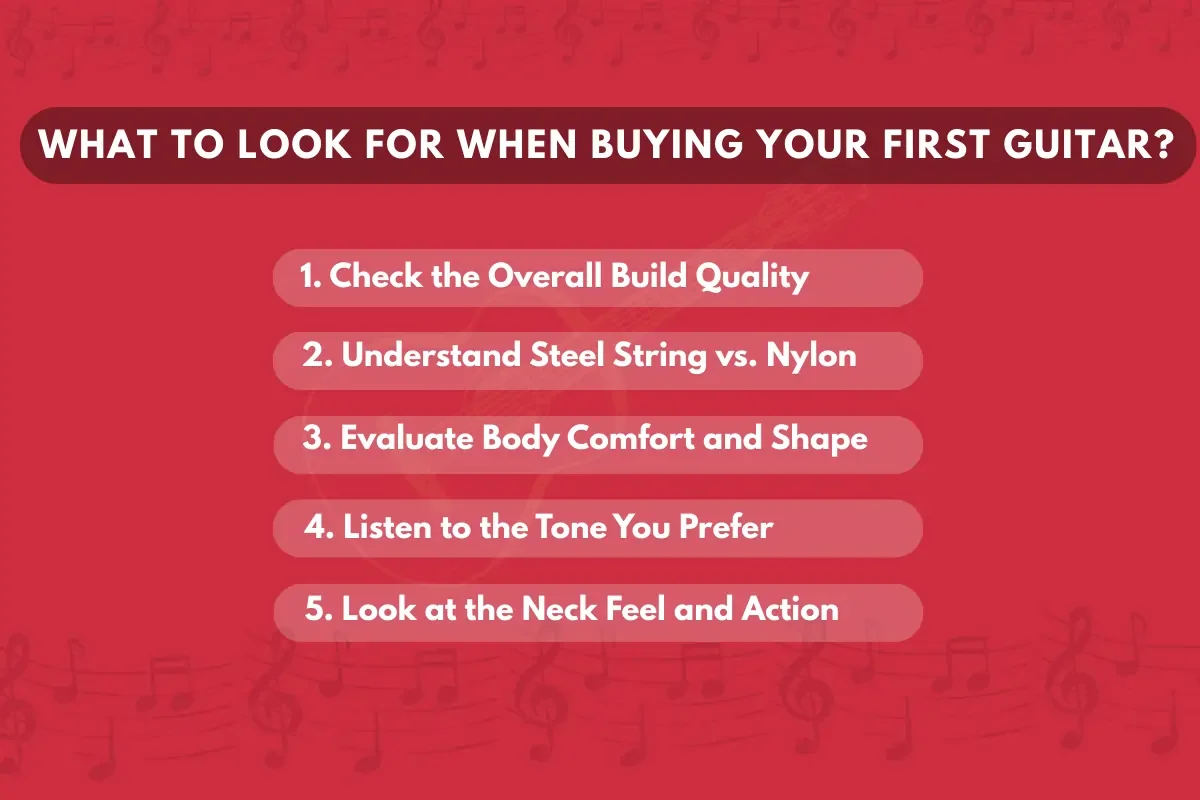
Here are the essentials every beginner should check when buying their first guitar, explained in clear points with each keyword used once and placed naturally.
1. Check the Overall Build Quality
Good build quality matters more than looks. A well-made instrument feels solid, stays in tune longer, and responds better when you start playing the guitar. Even entry-level models improve when the guitar manufacturing is consistent and reliable.
2. Understand Steel String vs. Nylon
Most beginners choose a steel string model because it gives a brighter, modern tone. Nylon strings are softer on the fingers and are usually found on classical guitars meant for specific styles of music. The choice affects feel, comfort, and sound, so match it to the songs you want to play.
3. Evaluate Body Comfort and Shape
The guitar should feel natural when held. A comfortable body helps you play the guitar longer without fatigue. Smaller guitar sizes are great for kids or anyone who wants a lighter, easier-feeling instrument.
4. Listen to the Tone You Prefer
Tone shapes your connection to the instrument. Acoustic guitars give a warm, open sound, while an electric guitar offers more control and effects. Pick the one that inspires you to play guitar more often.
5. Look at the Neck Feel and Action
A smooth neck and lower action make a beginner guitar feel easier during early practice. This helps you focus on forming chords instead of fighting string tension.
What Are the Ideal Guitar Sizes for Kids, Teens, and Adults?
Matching guitar sizes to a player's body type makes learning smoother, especially for guitar beginners who need something comfortable and easy to hold. Here are the key points explained clearly.
1. Choose 1/4 Size for Young Kids (Ages 4–6)
Small children need a light type of guitar they can lift without strain. A 1/4 size model keeps their arms relaxed and helps them focus on simple movements instead of fighting the instrument.
2. Pick 1/2 Size for Kids (Ages 6–9)
A 1/2 size works for slightly older kids with longer reach. It lets them start forming chords and moving between frets naturally, building early confidence while they begin playing the guitar with proper hand placement.
3. Use 3/4 Size for Pre-Teens and Smaller Teens (Ages 9–12)
The 3/4 size is the most comfortable middle ground. It gives younger players enough space to stretch their fingers without feeling overwhelmed. Many families choose this size when buyingtheirr first guitar for school lessons.
4. Choose a Full Size for Teens and Adults
Anyone with average arm length and height will feel at home with a full-size instrument. It offers better tone, fuller projection, and stronger build options, making it ideal for players who want to grow through regular practice.
5. Consider Arm Length, Not Just Age
If someone is shorter or has a smaller reach, they may still prefer a 3/4 size. If they have long arms, the full size will feel more balanced. Matching the guitar to the body makes it feeleasiery to play.
6. Think About Long-Term Fit
A guitar that feels stable and comfortable encourages consistent progress. Whether it’s an acoustic or electric model, choosing the right size helps the beginner feel like a capable guitar player from day one.
Should You Buy New or Used When Buying an Electric Guitar?
When buying an electric guitar or any starter guitar, beginners often wonder whether a new or a used is better. Here’s a clear breakdown:
Pros of Buying New
Comes set up from the manufacturer, making it easy to play.
Less risk of hidden damage or wear on frets, strings, or electronics.
Warranty included, so replacements or repairs are simpler.
Pros of Buying Used
It can save money, making it easier for a guitar for beginner to get a higher-quality guitar.
Sometimes you can find discontinued types of guitar models with unique sounds.
Cons of Buying New
Higher price, especially for good beginner-friendly models.
Some may feel “generic” if you want something more personalized.
Cons of Buying Used
It could require adjustments to guitar strings or the neck, making it slightly harder for new learners.
The Must-Have Guitar Accessories for New Players
Even a great beginner guitar is more enjoyable with a few essential guitar accessories. Here’s a list of items that make practice smoother:
Guitar Picks – Helps beginners strum accurately and comfortably.
Guitar Strap – Supports your posture while standing or moving.
Spare Guitar Strings – Quick replacement avoids interruptions in practice.
Tuner – Keeps your guitar for beginners sounding correct every session.
Stand – Protects your instrument when not in use.
Capo – Allows experimenting with styles of music in different keys.
Case or Gig Bag – Protects the guitar and makes it portable for lessons or practice sessions.
Having these accessories ensures that any new guitar player can focus on playing the guitar comfortably and consistently, without frustration or unnecessary stops.
Should You Ask a Guitar Teacher Before Buying?
When buying your first guitar, consulting a guitar teacher can save beginners time, frustration, and money. Even a short session with an experienced instructor helps ensure the instrument actually plays well and suits your goals.
Here’s why it matters:
1. Get a Personalized Recommendation
A teacher can suggest the right type of guitar, whether acoustic or electric, steel string or nylon—b, sed on your styles of music and hand size. This guidance helps you avoid wasting money on a guitar that feels awkward or hard to play guitar on.
2. Check Build Quality and Setup
Teachers know what to look for in guitar manufacturing quality. They can spot issues with neck alignment, action, or string height that a beginner might miss. Even small adjustments early on improve comfort and learning speed.
3. Avoid Buying Accessories You Don’t Need
A quick expert check can also point out essential guitar accessories like guitar picks or a guitar strap you truly need, preventing unnecessary spending.
4. Build Confidence in Your Choice
When a professional validates your selection, you feel confident starting lessons, which encourages consistent playing of the guitar. In short, a guitar teacher can help any beginner choose a guitar that’s comfortable, fits their goals, and sets them up for long-term success without overspending.
Ready to Start Playing the Guitar?
Once you’ve picked your guitar for beginners, it’s time to move from buying to actually playing the guitar. Here are the next steps to set yourself up for success:
1. Enroll in Guitar Lessons
Taking structured guitar lessons helps you build proper technique from the start. A teacher can guide you through chords, scales, and songs while ensuring you form good habits that make the guitar easy to play.
2. Focus on Music Education
Learning music theory alongside practice improves your understanding of styles of music and how songs are structured. Even simple exercises in reading notes, rhythm, or chord progression will make you a more confident guitar player.
3. Get a Personalized Recommendation
A quick check-in with a guitar teacher or expert can help you choose the right type of guitar, guitar strings, and guitar accessories that match your goals. Personalized guidance ensures you enjoy playing the guitar and progress steadily.
4. Set Up a Consistent Practice Routine
Consistency is key. Start with short daily sessions focusing on chord changes, strumming patterns, and simple songs. Use your guitar strap, guitar picks, and proper guitar sizes to stay comfortable while practicing.
5. Explore Different Styles of Music
Experimenting with multiple styles of music keeps practice fun and helps you discover which genre inspires you most. Whether on acoustic guitars, an electric guitar, or even a bass guitar, the right style keeps motivation high. By following these steps, any beginner can go from picking a guitar to confidently playing the guitar, enjoying lessons, and developing skills that last a lifetime.
Start Your Guitar Journey with Zoom Twin Cities
Choosing your guitar for beginners is just the first step. To truly grow as a guitar player and enjoy playing the guitar, guidance from experienced instructors is essential. At Zoom Twin Cities, our guitar lessons are designed to help you pick the right type of guitar, learn proper technique, and explore different styles of music with confidence. From selecting acoustic or electric, finding the right guitar sizes, to using the essential guitar accessories, we ensure every beginner feels comfortable and motivated.
Our classes provide personalized feedback, helping you progress faster and enjoy every moment of playing the guitar.
Ready to start?
Get a personalized plan, expert advice, and the support you need to finally start playing the guitar like a confident guitar player.
Your music journey begins here at Zoom Twin Cities!