What Is the Best Age to Learn Singing? (Kids, Teens & Adults Guide)
There's no single perfect age to learn singing, but the most effective window for structured lessons is between 8 and 12 years. That said, kids as young as 4 can start building musical foundations, and adults can see real progress at 30, 40, or beyond.
You've probably heard it both ways: "Start them young" and "It's never too late." The truth? Both are right. What matters far more is readiness, motivation, and finding the right teacher.
Whether you're a parent wondering if your 6-year-old is ready, a teenager navigating voice changes, or an adult who's always wanted to sing, this guide breaks it all down clearly. And if you're in Minnesota, expert singing coaching is closer than you think.
Quick Summary
No single age is "best" for learning to sing; readiness and motivation matter more than age
Kids as young as 4 can begin with fun music activities and ear training
Ages 8–12 offer the ideal window for structured vocal lessons
Teens can train safely and effectively through voice changes
Adults can learn at any age; focus and discipline often make them fast learners
The right teacher makes all the difference, no matter when you start
Is There Really a "Best Age" to Learn Singing?
No, there is not a single best age to learn singing. Singing responds well to training at almost any stage of life. It's not like gymnastics or ballet, where early physical conditioning shapes the body permanently. The voice keeps developing across decades; a 10-year-old and a 40-year-old can both make real, meaningful progress with the right guidance.
What actually drives results is readiness, the ability to focus, take direction, and practice with some consistency. Age is just the backdrop.
Best Age to Start Singing by Life Stage (Simple Breakdown)
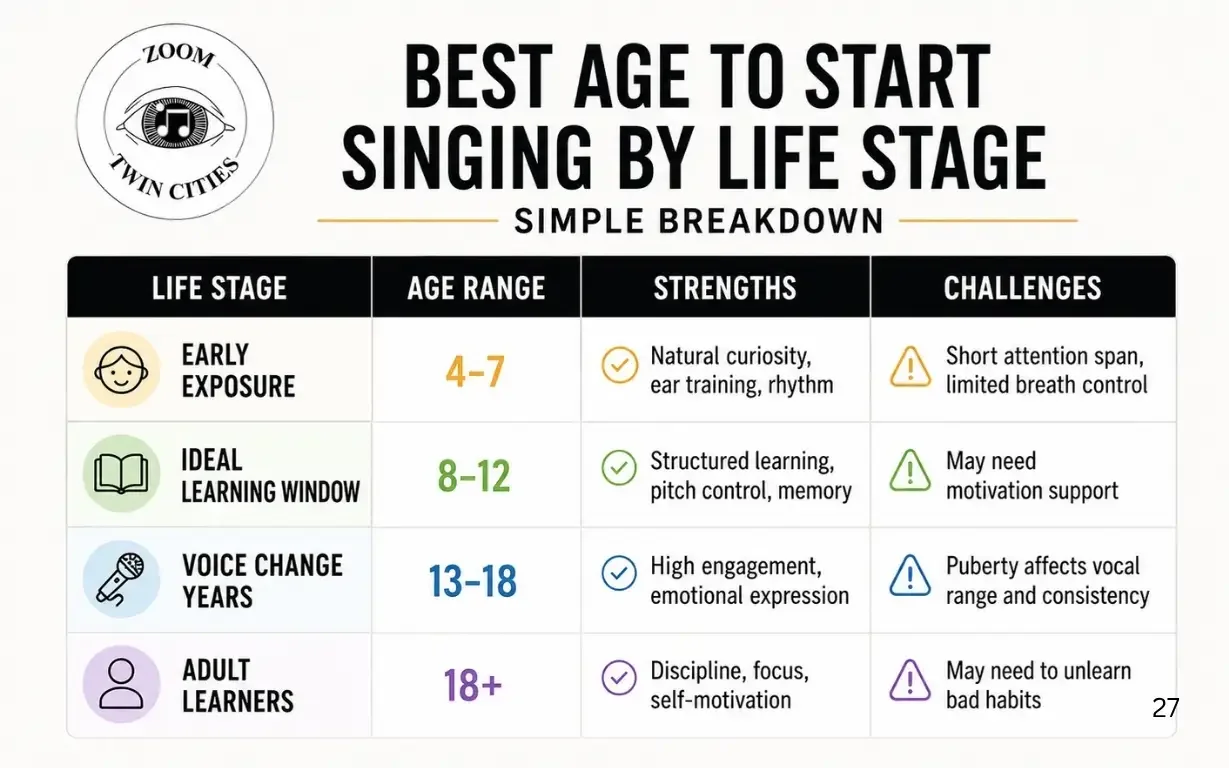
If you're trying to figure out when to start, ages 8–12 tend to be the sweet spot for structured lessons. But every stage has something to offer. Here's a clear look at what to expect:
| Life Stage | Age Range | Strengths | Challenges |
|---|---|---|---|
| Early Exposure | 4–7 | Natural curiosity, ear training, rhythm | Short attention span, limited breath control |
| Ideal Learning Window | 8–12 | Structured learning, pitch control, memory | May need motivation support |
| Voice Change Years | 13–18 | High engagement, emotional expression | Puberty affects vocal range and consistency |
| Adult Learners | 18+ | Discipline, focus, self-motivation | May need to unlearn bad habits |
Ages 4–7: Early Exposure Stage
Kids this age aren't ready for formal vocal technique, and that's completely fine. What they are ready for is musical play. Songs, rhythmic games, call-and-response exercises, and simple listening activities plant seeds that grow into real skill later.
At this stage, the goal isn't hitting the right notes. It's falling in love with music. A 5-year-old who sings just for the joy of it often becomes a confident, expressive 12-year-old singer.
Ages 8–12: Ideal Learning Window
This is where things really start to click. Kids in this age range can hold focus, match pitch more reliably, and absorb technique, breathing, posture, and tone with less effort than adults. Their voices are still light and unchanged, which makes it the perfect time to lock in healthy habits before puberty shakes things up.
Lessons at this age build a foundation that sticks.
Ready to get your child started? Book a trial singing lesson with Zoom Twin Cities in Minnesota.
Teens (13–18): Voice Change & Growth
Puberty rewrites the rulebook. For boys, the voice drops, cracks, and eventually settles into a new range, a process that takes roughly one to two years. Girls go through subtler shifts but still notice real changes in tone and control.
None of these changes means teens should stop singing. A good teacher will adjust the approach, choosing repertoire and exercises that work with the changing voice rather than against it. Teens also bring something younger kids often can't: genuine emotional investment and the drive to actually get good.
Adults (18+): It's Never Too Late
Adult learners regularly surprise themselves. You walk in with focus, self-awareness, and a clear sense of what you want; that combination moves things faster than most people expect.
Sure, adults sometimes have habits to unlearn. But with a patient teacher and regular practice, improvement isn't just possible. It's almost guaranteed.
Thinking about adult singing lessons near you? Connect with Zoom Twin Cities today and book your first session.
Signs You or Your Child Are Ready for Singing Lessons
Age is one signal, but it's not the only one. Look for these signs before booking that first singing lesson:
Genuine interest: They ask to sing, hum constantly, or love music without being pushed
Can follow basic instructions: They stay focused and engaged for 20–30 minutes
Shows some pitch awareness: They notice when something sounds "off."
Wants to improve: Not just performing, but actually caring about getting better
Comfortable with feedback: They don't completely shut down when corrected
If most of these apply, they're ready, regardless of age.
Not sure about your voice type? Check out our complete guide to the different types of voice for singing and find your perfect fit.
Benefits of Learning Singing For Kids and Adults
Singing does a lot more than fill a room with sound. The benefits show up in unexpected places: at school, at work, in relationships, and in how you feel about yourself.
Benefits for Kids
Brain development: Singing strengthens memory, language processing, and how the brain handles sound
Social confidence: Performing, even in small settings, builds self-esteem in ways that carry into everyday life
Creative expression: Kids learn to communicate emotions through music
Focus and discipline: Showing up, practicing, and improving teaches habits that transfer to everything else
Benefits for Adults
Stress relief: Controlled breathing and sustained focus make singing genuinely calming
Confidence boost: A surprising number of adult students say vocal training changed how they carry themselves
Personal growth: There's something quietly powerful about learning a new skill as an adult
Community: Group lessons or choirs connect people in a low-pressure, joyful environment
Wondering what suits you best, private or group music lessons? Check out our Private vs. Group Music Lessons: What Works Best? guide to make the right choice.
What to Do Before and Between Learning Singing Lessons?
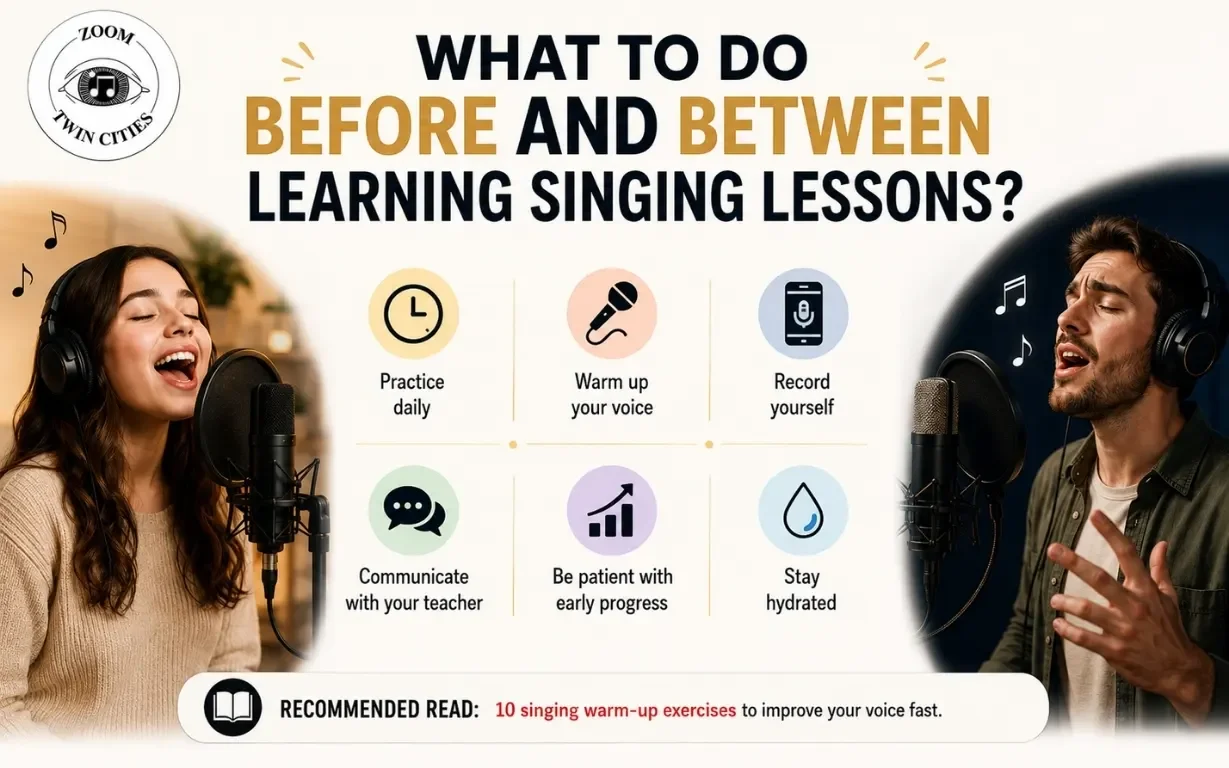
A few simple habits will make your singing lessons, or your child's, dramatically more effective from day one:
Practice between sessions: Even 10 minutes a day builds muscle memory faster than a weekly lesson alone
Never skip warm-ups: A cold voice strains easily; warming up is how you protect it
Record yourself: It's awkward at first, but listening back is the fastest way to hear what needs work
Talk to your teacher: Tell them what's clicking and what isn't; good teachers adjust when they know
Be patient with early progress: The first few weeks feel slow, then things start to compound
Stay hydrated: It sounds simple because it is; water directly affects how flexible and clear your voice sounds
Want to improve your voice fast? Check out our guide on 10 singing warm-up exercises to improve your voice fast.
How Long Does It Take to See Results in Singing?
Progress is real; the timeline looks different depending on when you start. Age affects how quickly the voice responds to training; here's an honest, age-based breakdown:
| Time Period | Kids (8–12) | Teens (13–18) | Adults (18+) |
|---|---|---|---|
| 2–4 Weeks | Basic rhythm and posture improve; singing feels more natural | Breathing control begins to develop despite voice changes | Technique starts clicking; diaphragmatic breathing feels less foreign |
| 1–3 Months | Pitch matching becomes more consistent; ear training sharpens | Voice stabilizes slightly; pitch control improves between change cycles | Noticeable control over tone and pitch; bad habits start to fade |
| 3–6 Months | Clear improvement in tone and range; ready for simple performances | Confidence grows; emotional expression develops strongly | Significant range and tone improvement; ready to perform comfortably |
| 6–12 Months | Can perform songs confidently; strong foundational habits locked in | Voice settles more; technique and repertoire expand noticeably | Most adults can perform songs and feel genuinely good about their voice |
| 1–3 Years | Advanced technique develops; personal style begins to emerge | Strong technical base; ready for competitive or performance settings | Solid foundation; personal style and advanced skills develop naturally |
The fastest-improving students at any age aren't always the most naturally gifted. They're the ones who practice between lessons and keep showing up.
Final Thoughts
There's no magic age to start singing. A motivated 7-year-old and a determined 45-year-old can both make impressive progress; what they share is a good teacher and the willingness to put in the work.
If you're in Minnesota and ready to start, Zoom Twin Cities offers expert vocal coaching for kids, teens, and adults. Whether you're looking for your child's first lesson or your own long-overdue musical beginning, this is where you begin.
Book a trial singing lesson today and discover what your voice is truly capable of.
Frequently Asked Questions About Learning Singing
-
Most children are ready for structured singing lessons around ages 6–8, when they can focus and follow instruction for 20–30 minutes. Younger kids, ages 4–5, still benefit from music-based activities that build listening and rhythm. Interest and readiness matter more than hitting a specific age.
-
Not even close. Adults at 30 often progress faster than teenagers because they bring better focus, discipline, and self-awareness. With consistent practice and proper technique, especially breathing and pitch control, real improvement is achievable at 30, 40, or beyond.
-
Singing is a skill. Some people start with a natural ear or strong tone, but technique, breathing, pitch matching, and resonance are learnable by almost anyone. Most people who believe they "can't sing" have simply never had proper instruction.
-
Yes, when taught by a qualified instructor. Trained vocal teachers know how to work gently with young voices, avoiding strain and prioritizing healthy technique over pushing range or volume too early.
-
Start with breathing. Diaphragmatic breath support underlies every other technique. From there, build basic pitch matching and simple vocal exercises that develop muscle memory. Hold off on complex repertoire early; getting the basics right makes everything else come faster.
-
Yes, consistently, with the right setup. A reliable connection, a decent microphone, and a skilled coach can deliver results that match in-person lessons. Many adult learners actually prefer online lessons for the flexibility. Consistency and practice between sessions are what make it work.