How Often Should You Replace Strings, Heads, or Pads?
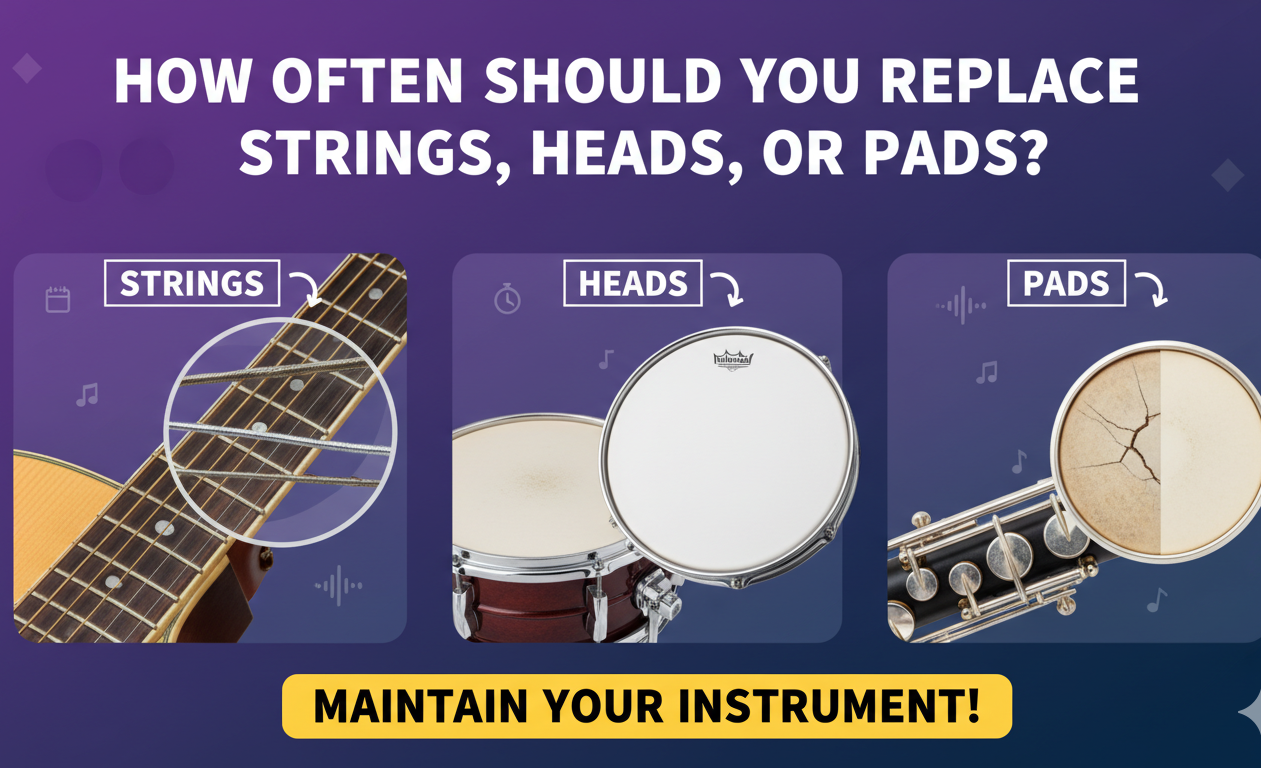
Many students across Minneapolis, Edina, and nearby suburbs struggle with sound or playability without realizing the issue isn’t their technique; it’s worn-out equipment. Strings lose brightness, drum heads lose tension, and electronic pads wear down over time. Knowing when to replace these parts helps students sound better, practice more comfortably, and stay motivated.
Proper maintenance isn’t about perfection; it’s about removing unnecessary obstacles from the learning process.
When Guitar and Bass Strings Should Be Replaced
Guitar and bass strings typically need replacement every one to three months for regular players, though this can vary based on practice frequency, playing style, and hand moisture. For students practicing several times a week in Minneapolis or Edina, dull tone, tuning instability, and rough texture are clear signs it’s time for new strings.
Beginners often wait too long, which makes learning harder than it needs to be. Fresh strings improve tone, make pressing easier, and help students enjoy practice more.
How Often Piano and Keyboard Players Need Maintenance
Acoustic pianos don’t require string replacement in the same way, but they do need regular tuning to keep strings at proper tension. In Minnesota’s changing climate, pianos should be tuned at least once or twice a year to account for seasonal humidity shifts.
Digital keyboards and digital pianos don’t require tuning, but pads and keys should be checked if the response becomes inconsistent. Keeping keyboards clean and protected extends their lifespan and playability.
Drum Head Replacement: What Drummers Should Know
Drum heads wear down faster than many students expect, especially on snare and toms that are played frequently. For beginner and intermediate drummers practicing regularly, heads typically last six months to a year.
Signs of wear include loss of tone, dents, and difficulty holding tuning. Replacing heads improves clarity, rebound, and overall sound, which helps drummers develop better technique and confidence during practice.
Electronic Drum Pads and Triggers: When to Replace Them
Electronic drum kits are popular for home practice in Minneapolis and the surrounding suburbs, but pads and triggers still wear out over time. Most electronic pads last several years, depending on playing intensity and build quality.
Reduced sensitivity, inconsistent triggering, or dead spots indicate it may be time for replacement. Regular inspection and proper setup help extend pad life and maintain a responsive practice experience.
Why Students Improve Faster With Well-Maintained Gear
Worn strings, heads, or pads force students to compensate without realizing it. This can slow progress and create bad habits. Fresh equipment responds more accurately, allowing students to focus on timing, tone, and technique.
Parents often notice improvement immediately after replacements because the instrument becomes easier and more enjoyable to play. Good gear maintenance directly supports consistent learning.
How Parents Can Stay Ahead of Equipment Issues
Parents don’t need deep technical knowledge to help their child succeed. Paying attention to sound quality, asking teachers for feedback, and scheduling regular check-ins prevent small issues from becoming major frustrations.
Music teachers at Zoom Twin Cities Music School often guide families on when replacements are needed, helping parents make informed decisions without overspending.
Why Zoom Twin Cities Music School Emphasizes Instrument Care
At Zoom Twin Cities Music School, students across Minneapolis, Edina, and surrounding suburbs are taught that caring for their instrument is part of being a musician.
Teachers explain when and why replacements are needed so students understand how equipment affects performance. This approach helps students stay motivated, sound better, and enjoy their learning journey without unnecessary setbacks.
Final Thought
Replacing strings, heads, or pads at the right time keeps music learning smooth and enjoyable. Well-maintained instruments support better sound, easier practice, and faster progress for students of all ages. With proper care and guidance, musicians can focus on growth instead of fighting worn-out gear.