If you've been thinking about how to learn piano at home for beginners, you need three things: a basic keyboard, a simple plan, and the willingness to show up every day, even for just 20 minutes.
This guide walks you through everything from the right beginner setup to how long it actually takes to make real progress. If you want structure and accountability alongside it, Zoom Twin Cities offers personalized piano lessons, online and in-person, built for beginners across Minnesota.
Quick Summary
Anyone can learn piano at home; age, talent, and sheet music knowledge are not requirements
Start with a digital piano with weighted keys, a sustain pedal, and a simple learning resource
Follow a structured beginner path: learn the keyboard layout, fix your posture, then start with simple chords and songs
Practice 30 minutes daily; consistency matters far more than long, occasional sessions
Expect real progress within 1–3 months with regular practice; a year in, you'll have a solid beginner-intermediate skill set
Record yourself once a week. Progress is hard to feel in the moment but easy to hear in a recording from a month ago.
A personalized teacher (like Zoom Twin Cities) helps you avoid bad habits and progress faster than going it alone
Is It Possible to Learn Piano at Home as a Beginner?
Yes, it is absolutely possible to learn piano at home as a beginner, and it's more practical today than it's ever been. Home piano learning works because you control the schedule, the pace, and the environment.
Between YouTube tutorials, structured apps, and virtual lessons from real teachers, beginners have access to tools that didn't exist a decade ago. You can pause a lesson at 10 PM, replay a tricky fingering pattern, or practice for 15 minutes during a lunch break. That flexibility is a real advantage, especially for adults balancing work and family.
Self-taught learning is possible. Guided learning is faster. Most beginners who stick with it combine both.
Some of the factors that make home learning effective:
Online piano lessons that fit any schedule
YouTube tutorials for visual learners
Virtual teachers who can give real-time correction
What Do You Need Before You Start Learning Piano?
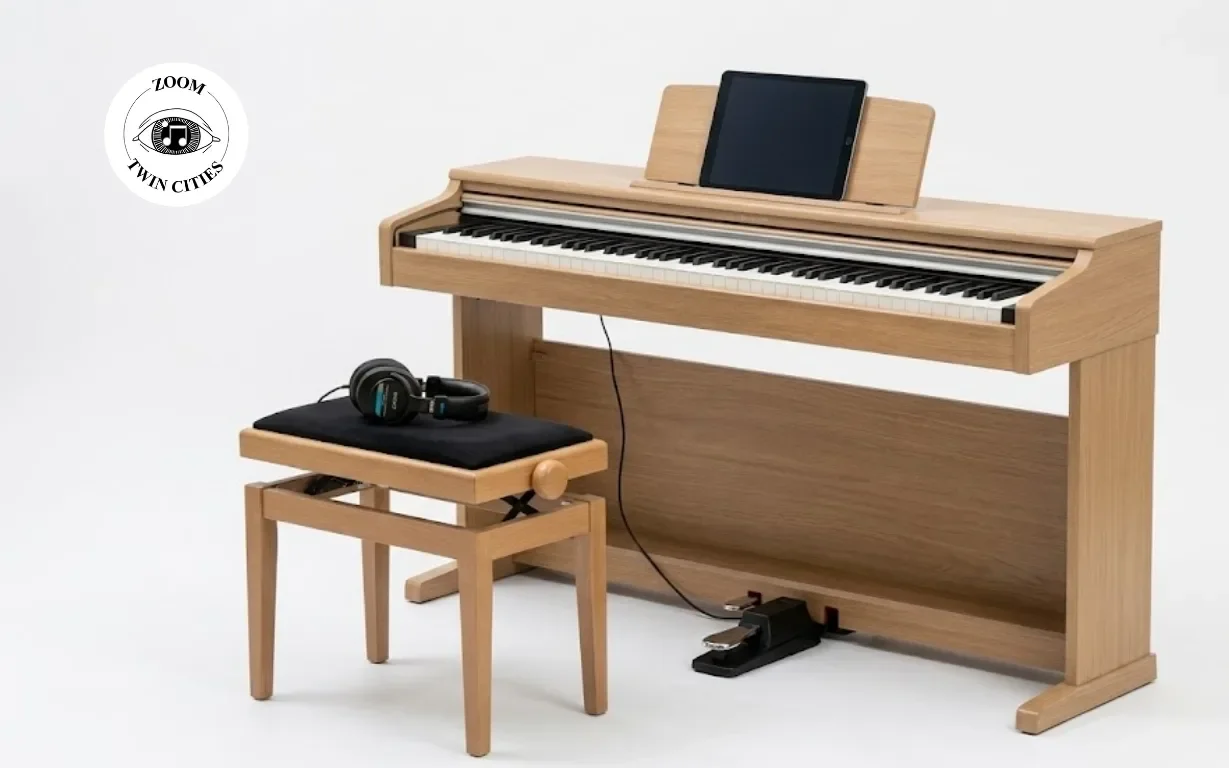
You don't need a grand piano to get started. You just need a modest setup to start learning piano; what matters is that the instrument feels close to the real thing.
| Item | What to Look For |
|---|---|
| Digital piano / keyboard | Weighted or semi-weighted keys, 61–88 keys |
| Sustain pedal | Works with most digital pianos |
| Piano bench or stool | Adjustable height preferred |
| Headphones | For quiet practice at home |
| Learning resource | App, teacher, or video course |
Keyboard vs. piano for beginners: A basic keyboard is fine to start. But if you're serious about long-term progress, a digital piano with weighted keys gives your fingers the right resistance training from day one. Playing on unweighted keys for months and then switching feels awkward; it's better to start on weighted.
Not sure which setup fits your budget and goals? The instructors at Zoom Twin Cities can help you figure out what makes sense before you spend a dollar.
The Best Way to Start Learning Piano at Home
Structure matters. Beginners who jump straight into songs they love, without building the fundamentals first, usually plateau fast and get frustrated. The best approach to start learning piano at home is a short, deliberate roadmap that builds confidence layer by layer.
Step 1: Learn the Piano Keyboard Layout
Before playing anything, know your instrument.
The keyboard repeats a pattern of 12 notes: 7 white, 5 black
Middle C is your anchor point; everything is measured from there
Your fingers are numbered 1 (thumb) to 5 (pinky) on each hand
Spend 10 minutes just naming the white keys out loud while pressing them. It sounds basic. It works.
Step 2: Learn Proper Hand Position and Posture
Bad posture causes tension. Tension causes pain. Pain stops practice.
Sit with your back straight and shoulders relaxed
Keep your wrists slightly elevated, not bent up or drooping down
Curl your fingers naturally, like you're holding a small ball
Your elbows should be roughly level with the keys
This doesn't have to be perfect on day one, but correcting it early saves you from bad habits that are hard to undo.
Step 3: Start With Simple Songs and Chords
Simple songs aren't beneath you; they're where confidence comes from.
Start with C major, G major, and F major chords. These three chords appear in hundreds of popular songs. Learn to switch between them smoothly, and you'll already be making recognizable music within your first week.
Don't worry about playing fast. Slow and clean beats fast and sloppy every time.
Tip: Record yourself once a week. Listening back, even when it sounds rough, shows you how far you've actually come. Progress is hard to feel in the moment but easy to hear in a recording from a month ago.
Want a structured guide built around your schedule and goals? Zoom Twin Cities offers beginner piano lessons, online and in-person, customized to your pace.
How to Practice Piano Effectively at Home?
The most common mistake beginners make isn't practicing wrong; it's not practicing consistently. Thirty minutes every day beats two hours on Saturday followed by nothing for a week.
Consistency builds muscle memory. Your fingers need repetition to automate what your brain is learning. Short, regular sessions do that. Long, occasional sessions mostly just tire you out.
A Simple 30-Minute Beginner Practice Routine
Here's a routine to help you practice piano effectively:
Warm-up (5 min): Play each key slowly, hand over hand. Loosen your fingers.
Finger exercises (5 min): Five-finger scales in C major, hands separately.
Chords and scales (10 min): Practice your current chord set with smooth transitions.
Song practice (8 min): Work on one song, one section at a time. Don't restart from the beginning every time you make a mistake; isolate the hard part.
Review and listen (2 min): Play through what you know. Let it feel good.
That's it. Thirty minutes, done right, adds up faster than you'd think.
Recommended Read: 5 Benefits Starting Piano Lessons at an Early Age
Beginner Piano Mistakes to Avoid
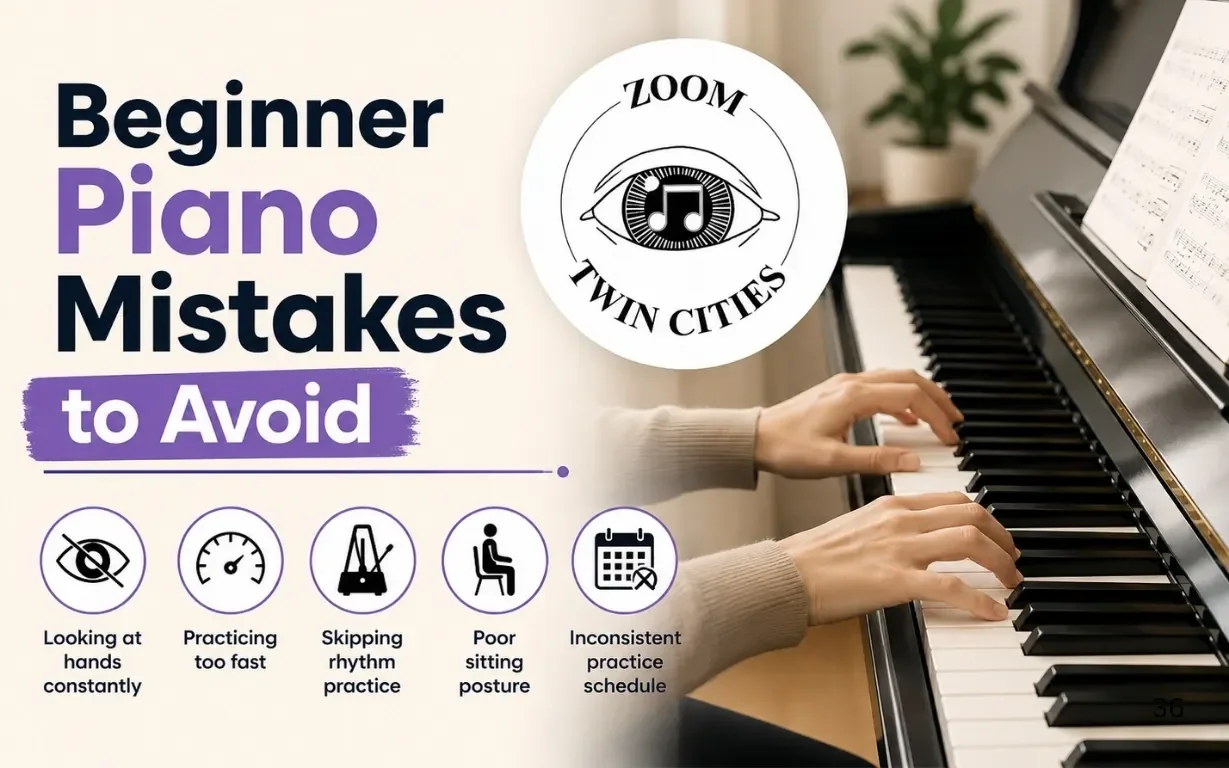
Common beginner piano mistakes include rushing songs, ignoring rhythm, slouching at the bench, and skipping the boring-but-essential basics like scales and finger exercises.
Here's what trips most beginners up:
Looking at hands constantly: Trains your eyes instead of your fingers; trust the feel
Practicing too fast: Speed comes from slow, clean repetition, not rushing
Skipping rhythm practice: playing the right notes at the wrong time is still wrong; use a metronome
Poor sitting posture: Tension in your shoulders and wrists will slow you down and can cause strain
Inconsistent practice schedule: Sporadic sessions break the muscle memory you're trying to build
None of these are fatal. All of them are fixable, especially with a teacher who can catch them early.
How Long Does It Take to Learn Piano?
Learning piano depends on how often you practice. Playing simple songs for fun takes about 1 to 2 months. Reaching a comfortable intermediate level, where you can tackle most popular songs, takes around 1 to 2 years. Advanced classical or jazz playing takes 5 to 10+ years of dedicated, consistent practice.
Here's what's realistic for beginners who practice 20–30 minutes a day:
| Timeframe | What You Can Expect |
|---|---|
| 1–2 weeks | Know the keyboard layout, basic finger positioning |
| 1 month | Play simple songs with both hands (slowly) |
| 3 months | Comfortable with basic chords, simple melodies, reading basic sheet music |
| 6 months | Play recognizable songs, basic scales, smoother transitions |
| 1 year | Solid beginner-intermediate skills, real repertoire |
Progress depends almost entirely on consistency, not talent. Most people who "can't learn piano" just stopped practicing.
Recommended Read: How Music Theory Improves Performance
7 Easy Piano Songs Beginners Can Learn at Home
Easy songs build real skills. Here are some easy piano songs beginners can learn at home that teach a specific technique: chord transitions, rhythm, or simple melody patterns.
Twinkle Twinkle Little Star: Perfect for right-hand melody and basic finger movement
Happy Birthday: Simple rhythm, good for understanding beat
Ode to Joy: Introduces steady quarter-note rhythm
Jingle Bells: Fun chord practice, seasonal motivation
Let It Be: C, G, Am, F chord progression; found in dozens of songs
Clocks (Coldplay): Repetitive arpeggios, great for finger independence
Imagine (John Lennon): Slow and deliberate, perfect for building control
Start with one. Learn it slowly. Then move to the next.
Recommended Read: How can Beginners Play Christmas Carols on the Piano
Choose Zoom Twin Cities for Beginner Piano Lessons
Finding a good teacher changes everything. The difference between grinding through YouTube videos alone and having someone correct your hand position in real time is significant, and it's exactly what Zoom Twin Cities offers.
Zoom Twin Cities provides:
Personalized piano lessons tailored to your skill level and pace
Lessons for kids, teens, and adults, no age cutoff, no judgment
Both online and in-person options across Minnesota
Instructors who specialize in beginner-friendly instruction
Flexible scheduling that works around your life
A learning environment that's encouraging, not intimidating
Whether you're in Minneapolis, St. Paul, or anywhere in the Twin Cities area, Zoom Twin Cities connects you with instructors who focus on real progress and personalized learning. Learn more about Zoom Twin Cities and its approach to music education.
Our Services:
Final Thoughts
Anyone can learn piano. That's not a sales pitch; it's just true. Talent matters far less than consistency, and consistency is something you can control.
Start with the basics. Build a simple daily practice routine. Pick songs you actually like. And don't skip the fundamentals just because they feel boring; they're the reason good players sound the way they do.
If you want to move faster and avoid the frustrating guesswork of learning alone, consider getting real guidance from the start.
Ready to learn piano with real support? Connect with Zoom Twin Cities to explore beginner-friendly piano lessons designed for kids, teens, and adults across Minnesota. Whether you want virtual lessons or one-on-one in-person instruction, our instructors will help you build confidence from your very first note.
Our Location
Frequently Asked Questions
-
A digital piano with weighted keys is the best starting point for most beginners. It mimics the feel of an acoustic piano, takes up less space, and costs significantly less. Look for at least 61 keys and a sustain pedal input.
-
Yes, you can learn piano at home. Apps, videos, and structured guides make solo learning possible. That said, a teacher catches mistakes you can't see yourself, which usually speeds up progress and prevents bad habits from sticking.
-
Keyboard and piano both work to start. But a digital piano with weighted keys gives better long-term results. Playing on unweighted keys for months and then switching to a weighted instrument feels like learning from scratch.
-
No. Beginners can start with chords, simple tutorials, and pattern-based learning. Reading sheet music does help your long-term growth, but it's not a prerequisite for playing your first song.
-
Yes, especially when they're one-on-one with a real instructor. Online lessons give you live feedback, flexible scheduling, and personalized instruction from your own home. They work as well as in-person for most beginners.