Piano Lessons for Kids in Minneapolis: Best Age to Start
Most children are ready for piano lessons somewhere between ages 5 and 7. Age is just one piece of it. A 5-year-old who loves music and can sit still for half an hour is going to do a lot better than a 7-year-old who was signed up against their will.
Piano lessons for kids in Minneapolis are widely available, but knowing when to start and what to look for makes a real difference in how well it goes. This guide covers everything you actually need to know, including the best starting age, the real signs of readiness, what happens during lessons, and how to find the right program in the Twin Cities.
What Parents Need to Know
Most children are ready to start piano lessons between ages 5 and 7.
Parents researching piano lessons for kids in Minneapolis should focus on readiness rather than age.
Piano lessons help improve concentration, confidence, creativity, and fine motor skills.
Beginner lessons are usually 30 minutes long and designed to be fun and engaging.
Private lessons offer personalized attention, while group classes provide social learning opportunities.
Consistent practice of 10–15 minutes a day is ideal for young beginners.
Parents play a key role by creating a positive practice routine and encouraging progress.
Choosing a teacher who specializes in working with children is one of the biggest factors in long-term success for families seeking kids piano lessons Minneapolis.
What's the Best Age to Start Piano Lessons for Kids?
Most children are ready to begin beginner piano lessons for children programs between ages 5 and 7. That is the sweet spot where kids have enough hand strength, attention span, and basic reading ability to follow along with a teacher. Some kids show readiness at 4, others not until 8. It really depends on the child.
The key is not the number on the birthday cake. It is whether they can sit still for 20 to 30 minutes, follow simple directions, and show genuine interest in music or the instrument.
Signs Your Child Is Ready for Piano Lessons
Forget trying to match the "right age" exactly. These are the practical signs that tell you your child is actually ready, not just old enough.
They're curious about the piano. If they tap the keys at grandma's house or ask how music works, that's a good signal.
Basic reading and counting: Music uses letters (A through G) and numbers (for rhythm and finger positions). Kids who've had some exposure to both adapt faster.
They Can Focus for 20–30 Minutes: A beginner piano lesson typically runs 30 minutes. If your child can't hold attention through a short activity without wandering off, the timing might not be right yet.
Hand coordination and finger strength: By age 5, most children have enough fine motor development to press individual keys with control.
They want to do it. This one matters more than people think. A child who asks for lessons is almost always easier to teach than one who was signed up without much input.
Not sure whether your child is ready to start? Zoom Twin Cities can help you evaluate readiness and connect with experienced piano teachers who specialize in young beginners across Minneapolis and the Twin Cities.
Benefits of Piano Lessons for Kids
Parents choose piano lessons for kids in Minneapolis for many reasons, and the benefits of piano lessons go well beyond learning to play music. Many families choose piano lessons for kids in Minneapolis because of these developmental benefits.
1. Improves Concentration and Focus
Regular piano practice trains kids to sit with a task, work through difficulty, and stay focused until they get it right. That kind of mental discipline tends to carry over into school and other areas of life.
2. Supports Cognitive Development
Learning to read music, count rhythm, and coordinate both hands simultaneously activates multiple areas of the brain at once. Research consistently links music education to stronger cognitive and child development outcomes in children, particularly in language processing and memory.
3. Strengthens Fine Motor Skills
Each hand does something different on the piano. The left hand might hold a steady rhythm while the right plays the melody. Getting both hands to cooperate develops finger independence and hand-eye coordination in ways few other activities can match.
4. Builds Confidence and Self-Esteem
There is something genuinely powerful about a kid sitting down at a piano and playing a song they worked hard on. Every small milestone, including first full song, first recital, and first piece played from memory, builds real confidence.
5. Encourages Creativity and Self-Expression
Once kids get past the basics, piano becomes an outlet. They start experimenting, making up little tunes, and playing around with sounds. That creative freedom is valuable, especially for kids who do not find it in sports or other structured activities.
6. Develops Discipline and Patience
Progress on piano is gradual. A child learns pretty quickly that shortcuts do not work. You have to practice the hard part slowly before it becomes easy. That lesson, that effort over time produces results, is one of the most useful things a kid can learn.
Recommended Read: How to Learn Piano at Home for Beginners?
What to Expect During Your Child's First Piano Lesson?
The first session of piano lessons for kids in Minneapolis is usually fun, relaxed, and age-appropriate. A good teacher knows better than to overwhelm a child on day one. Here's what typically happens.
1. Meeting the Piano Teacher
The first few minutes are usually just getting comfortable. The teacher introduces themselves, asks your child some easy questions, and gets a feel for their personality and experience level. This is important because the relationship between a child and their teacher matters a lot.
2. Learning Basic Piano Keys
Most first lessons start with orientation. Where is middle C? How are the black and white keys organized? Kids learn the pattern of two and three black keys and start to find their way around the keyboard instrument. It's more like a treasure hunt than a lecture.
3. Understanding Rhythm and Timing
Even in the first lesson, rhythm and basic Ear Training comes up. Clapping along to a beat, counting out loud, and identifying fast versus slow are the building blocks. A child who can clap a steady beat is already ahead.
4. Simple Songs and Activities
First lessons often end with a song. It might be something tiny, like five notes with one hand, but it is real music. That moment of playing an actual song, even a simple one, is motivating. Kids leave feeling like they did something.
5. Setting Practice Expectations
Before you leave, the teacher will usually explain what to work on at home. For students taking piano lessons for beginners, this is usually short and specific. Maybe one exercise, one song, 10 minutes a day. Clear instructions help parents support practice without guessing.
Recommended Read: 5 Benefits of Starting Piano Lessons at an Early Age
Private vs. Group Piano Classes for Kids in Minneapolis
Families considering piano lessons for kids in Minneapolis often compare private and group options. The right choice depends on your child's personality and your schedule.
Benefits of Private Piano Lessons
Private piano lessons for kids Minneapolis give the teacher's full attention to your child throughout the entire session. They can adjust pace on the fly, catch bad habits before they stick, and tailor the songs and exercises to what keeps your kid engaged. Private music lessons for kids in Minneapolis typically run 30 minutes for beginners and increase to 45 or 60 minutes as they progress.
Benefits of Group Piano Classes
Piano classes for kids Minneapolis often put children in a room with peers, which many students find motivating. They're usually more affordable than private lessons, and the social dynamic can make practice feel less like a chore. Kids also tend to push themselves a bit when they see what classmates are learning.
Quick Comparison: Private vs. Group Piano Lessons
| Feature | Private | Group |
|---|---|---|
| Teacher Attention | One-on-one instruction | Shared with the group |
| Learning Pace | Personalized | Follows class pace |
| Social Interaction | Limited | High |
| Cost | Higher | More affordable |
| Best For | Focused or shy learners | Social and collaborative learners |
Which Option Is Best for Your Child?
A shy or easily distracted child often does better with private lessons to start. A social kid who thrives in a group setting might actually progress faster in a class environment. Some families do both: group lessons for fun and community and private lessons for focused skill-building.
Every child learns differently. If you're looking for personalized guidance, explore our music programs and teaching options at zoom twin cities music studios to find the right fit for your child's learning style and goals.
What to Look for in a Piano Teacher for Kids?
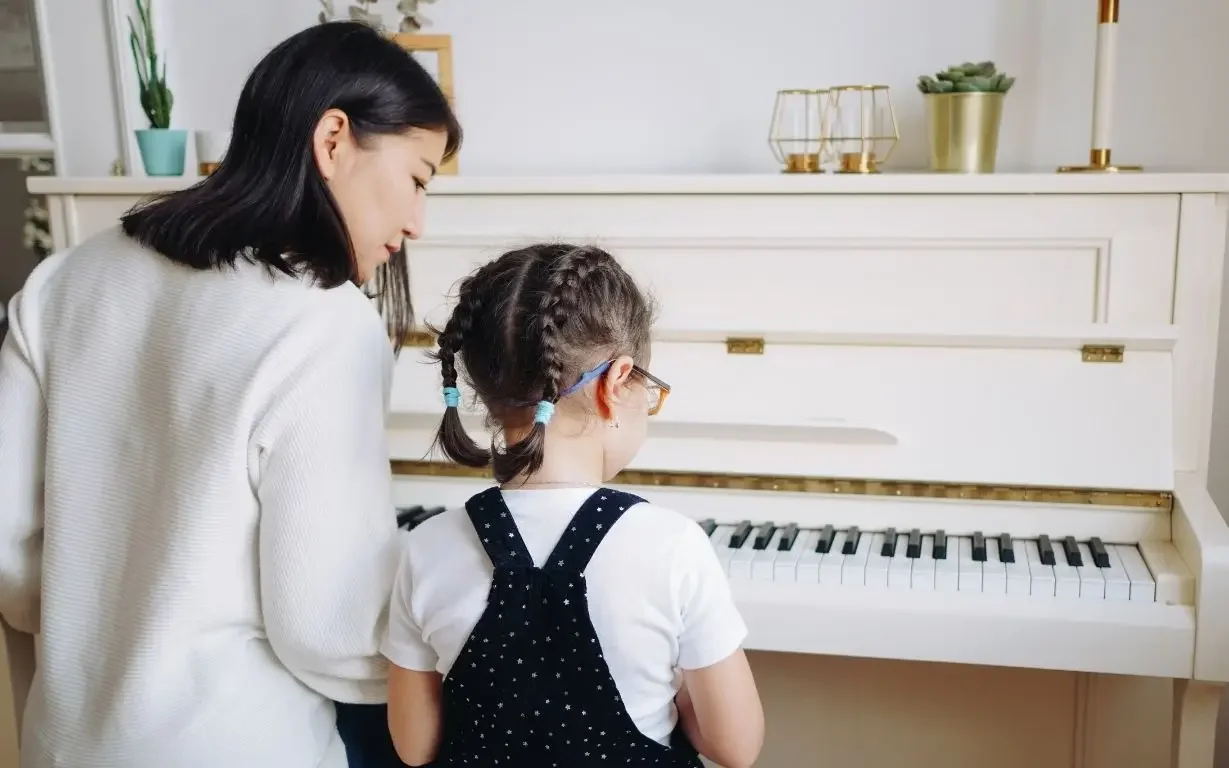
The teacher matters more than the studio, the location, or even the curriculum. A good fit keeps kids excited to show up every week. The success of piano lessons for kids in Minneapolis often depends on finding the right teacher. This is probably the most important decision you'll make.
When looking for children's piano lessons in Minneapolis, here's what to ask:
Do they have experience teaching young beginners? Teaching adults and teaching a 6-year-old are completely different skills.
What method or beginner piano curriculum do they use? There's no single right answer, but they should be able to explain their approach.
How do they handle a distracted or frustrated child? Patience and flexibility matter a lot at this age.
Do they incorporate music theory and sight reading? Basic theory shouldn't wait until a child is "advanced." Good teachers weave it in early.
Do they offer recitals? A music recital gives kids something to work toward. It builds confidence and makes the practice feel meaningful.
Ask for a trial lesson if possible. Watch how the teacher interacts with your child, not just what they teach but how.
How Often Should Kids Take Piano Lessons?
Most beginner kids do best with one 30-minute piano lesson per week combined with short daily practice at home. That combination of weekly instruction plus consistent home practice is enough to build real skills without overwhelming a young learner. More is not always better, especially in the early years.
Recommended Lesson Frequency
Once a week is standard for most beginners, and it works well. It gives kids enough time to practice between sessions without forgetting what they learned. Some advanced students eventually move to twice a week, but that's not necessary in the early years.
Weekly Practice Expectations
For ages 5-7, 10-15 minutes of daily practice is the target. Short and consistent practice is always better than long and occasional practice. As kids advance and pieces get more complex, practice time naturally grows, but don't force it early.
Creating a Consistent Practice Routine
The best practice happens at the same time every day, so it becomes habit rather than negotiation. After school, before dinner, right after homework, whatever fits your household. Keep it positive. Practice shouldn't feel like punishment.
How Parents Can Support Their Child's Piano Journey?
Parents don't need to know how to play piano to make a real difference in their child's progress. Showing up, staying consistent, and keeping practice positive goes further than most people think. The early years especially are when parental involvement has the biggest impact on whether a child sticks with it.
Creating a Positive Practice Environment
Provide a quiet, distraction-free practice space
Create a consistent practice schedule at home
Encouraging Consistency Without Pressure
Ask what they're working on after each lesson
Acknowledge the small wins, including first song all the way through, first time both hands worked together, and first recital.
Check in with the teacher every few weeks
Make music a fun and enjoyable part of daily life
At the end of the day, you don't need to be a musician to be a great support system. Keep it consistent, keep it positive, and make practice feel like a normal part of the day.
Find Piano Lessons Near You
Looking for the perfect place to begin your child's musical journey? Our experienced instructors offer engaging piano lessons for kids of all ages, helping young students build confidence, creativity, and a lifelong love of music. Explore our nearby locations and find the right fit for your family:
Whether your child is just starting out or ready to advance their skills, our piano lessons provide a fun and supportive environment where kids can learn, grow, and enjoy making music.
Why Choose Zoom Twin Cities for Your Child's Piano Lessons?
Zoom Twin Cities helps Minneapolis families find the right piano teacher for their kid fast, with less guesswork. We match you with experienced teachers who actually know how to work with young beginners, set up trial lessons so there is no pressure to commit right away, and help you pick between private, group, or semi-private formats based on what fits your child best.
Here's what makes us the easy choice:
We match kids with teachers who actually get kids. Not every great pianist is great at teaching. We know the difference and connect you with instructors who have real experience working with young beginners.
Trial lessons. The best way to know if it's a good fit is to just try it. We help set up trial lessons so you and your child can get a feel for the teacher first.
Private, group, and semi-private options. Shy kid? Social kid? It does not matter. We have a format that fits, and we can help you figure out which one works best.
Local programs across Minneapolis and the Twin Cities. We help you find options close to home so lessons fit into your routine.
We focus on the right fit, not just the closest option. A program down the street isn't worth much if the teacher and your kid don't click. We care more about matching personalities and goals than convenience.
Basically, our whole goal is to take the guesswork out of finding piano lessons for kids. Reach out to Zoom Twin Cities today, and let's get your child started on the right note.
Final Thought
The right age for piano lessons for kids in Minneapolis is usually somewhere between 5 and 7, but the right readiness matters more than any number. A curious, willing kid at age 5 will get more out of lessons than a disinterested 8-year-old pushed into it by a parent.
Whatever age your child starts, what they get from music education goes way beyond playing songs. Discipline, focus, confidence, and creativity develop alongside every scale and every song they learn to play. Starting your child on piano is one of the better investments you can make in their development, not just musically but for focus, discipline, and self-confidence. The Twin Cities and wider Minnesota area have many talented teachers and programs to choose from.
Minneapolis and the Twin Cities have no shortage of talented teachers and well-run programs. The key is finding the one that fits your child's personality, pace, and interests, not just the closest or cheapest option. If you're in Minneapolis or the surrounding Saint Paul area and looking for the right fit for your child, Zoom Twin Cities can help you find local music education options that match your schedule, budget, and your kid's personality.
Ready to help your child begin their musical journey? Contact zoom twin cities today to discuss lesson options, teacher matching, and trial sessions through our piano lesson consultation page.
Frequently Asked Questions
-
Most children are ready between ages 5 and 7. A 4-year-old with strong focus and genuine interest can also do well, but readiness matters more than age.
-
Beginners typically start with 30-minute lessons. As they progress, most move to 45 or 60 minutes.
-
Private lessons offer individual attention and a customized pace. Whereas group classes are more social and usually more affordable, but feedback is less personalized.
-
Either works for beginners. If you go digital, choose a keyboard with weighted or semi-weighted keys. This better simulates the feel of a real piano and builds proper finger strength.
-
A beginner can play simple songs within the first month. Playing with confidence across a range of pieces typically takes 2 to 3 years of consistent practice. There is no finish line. Most pianists keep learning their whole lives.
-
Yes, especially for younger children. It emphasizes listening and parental involvement, which works well for ages 3-6. It does require a committed parent to sit in on lessons and practice at home.
-
Usually nothing except themselves and a good attitude. Some teachers provide a method book; others ask you to purchase one. Check with the studio or teacher ahead of time.
-
Some can, with the right teacher and format. Parent-assisted lessons or early childhood music programs work better at this age than traditional instruction.